On the year of the thesis
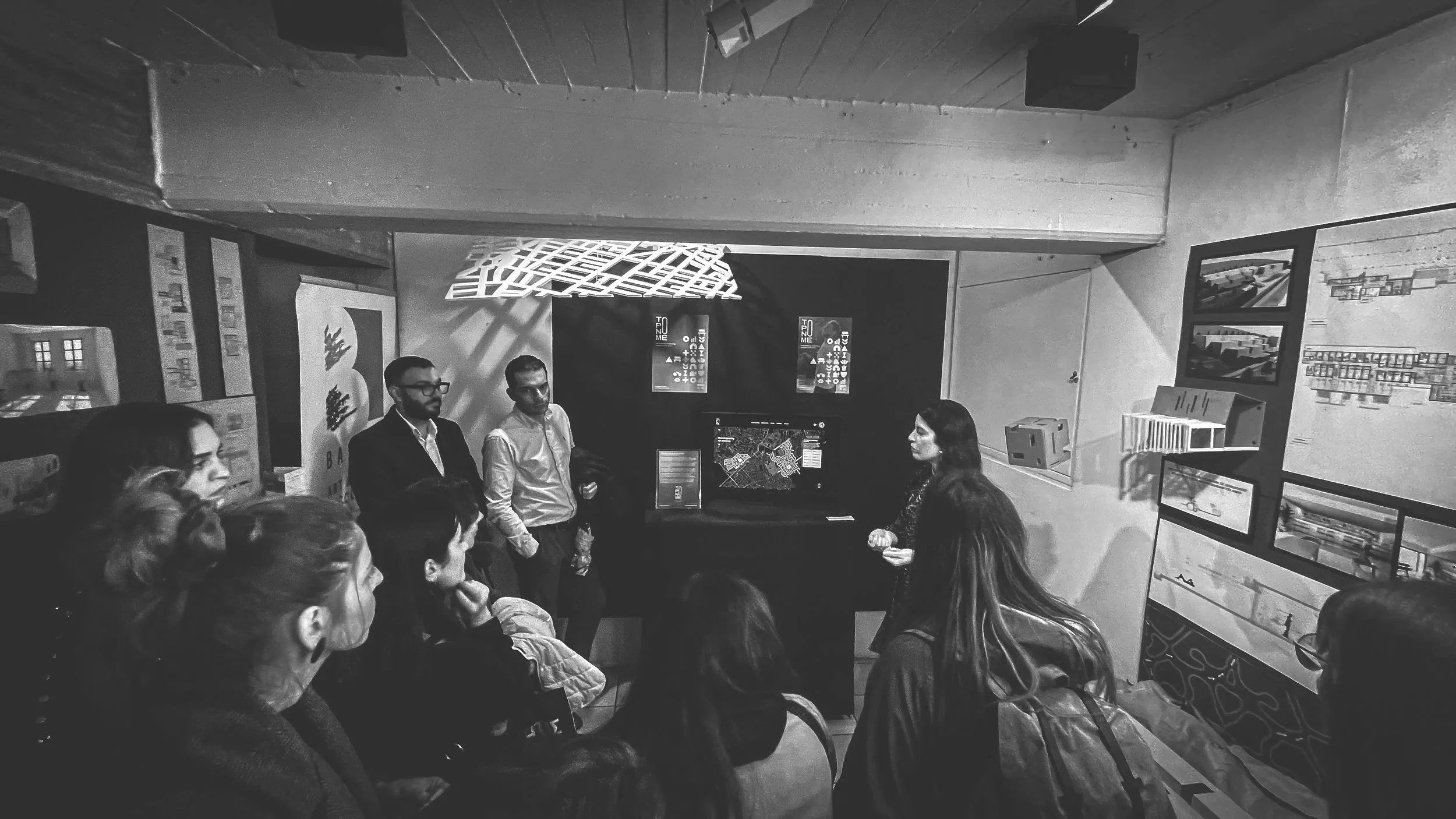
There is a particular kind of professional relationship that has no clear analogue elsewhere in teaching. Not quite mentor and student. Not quite collaborator. Not quite editor, though there is a lot of editing. Not quite therapist, though there are moments, usually around the sixth month, always on a deadline, where the line becomes difficult to locate. Supervising a Master's thesis is its own thing entirely. And a year of it, which is what the Digital Design MA requires, is long enough to watch someone change.
It begins, almost without exception, with ambition.
The topic will be significant. The research will fill a gap that the field has been ignoring. The methodology will be rigorous. The outcome will be, and this word appears in more initial proposals than I can count, innovative. I do not discourage this. Ambition is the right place to start. But I have learned to listen carefully to the first conversation, not for what the student wants to research, but for what is underneath the wanting. Whether the topic is genuinely theirs or whether it is performing the idea of a thesis topic. Whether the enthusiasm is curiosity or anxiety dressed as certainty. Both are common. Both are workable. They require different things from the year ahead.
The first few months are largely about narrowing.
This is, for most students, deeply uncomfortable. The thesis begins as a wide and promising territory, and the work of the first semester is to reduce it, to find the specific question inside the broad interest, to locate the edge of what can actually be argued in the space available, to let go of the five adjacent ideas that are also interesting but belong to a different project entirely.
Students experience this as a loss. They arrive with a map that covers everything and leave the first few months of supervision with something much smaller. It does not feel like progress. From the outside, it is almost entirely progress.
What I am doing in this phase, though it rarely looks like it, is protecting them from themselves. From the thesis that tries to say everything and ends up saying nothing. The research question is so broad that it could support seventeen different answers. From the ambition that, left unshaped, produces a document that is exhausting to read and impossible to examine.
Narrowing is not a reduction of the work. It is the work.
The middle months are where the character of the supervision changes. By this point, the student knows more about their specific topic than I do. This is as it should be, and I try to say so clearly, not as false modesty, but because it is true and because recognising it shifts something in how they hold the material. They stop looking to me for answers and start using our conversations as a place to think out loud. My role becomes less about direction and more about resistance: the useful kind, that tests an argument without dismantling it, that asks the question an examiner will ask, so the student has already considered it.
This is, I think, the most interesting phase of the supervision year. The ideas are developed enough to push against. The student is confident enough to push back. The conversation becomes genuinely bilateral in a way that the earlier months rarely allow. I learn things in these conversations. About the field, about approaches I had not considered, about the particular intersection of design and research that each student is navigating in their own way. This is one of the quieter rewards of supervision that nobody mentions when they describe the role.
You spend a year thinking carefully about something you might never have thought about otherwise. Then, somewhere in the final stretch, the anxiety arrives.
It is always there to some degree; a thesis is a high-stakes piece of work, and pretending otherwise helps no one. But in the last two months, it has concentrated. The writing that felt manageable suddenly becomes vast. The argument that seemed solid reveals a gap that the student is now convinced will unravel everything. The conclusion, which needs to do several things at once, refuses to come together.
This is the phase that requires the most steadiness from the supervisor.
Not reassurance exactly, empty reassurance is its own kind of abandonment. But a calibrated honesty: this part is not working yet, and here is specifically why, and here is what would fix it. That gap in the argument is real, but it is also closeable. The conclusion is not working because it is trying to summarise rather than land, those are different things, and here is the difference.
The student at this stage does not need enthusiasm. They need someone who has read the work carefully enough to tell them the truth about it. That is what they are paying for, in the end. Not encouragement, clarity.
The submission, when it finally happens, produces a very specific kind of silence.
I have noticed this across multiple students and multiple years. There is no celebration, not immediately. There is something more like disorientation. The document that has structured their thinking for twelve months is finished, and the absence of it is strange. They do not quite know what to do with the space it leaves. A few days later, something else arrives. A message, usually. Quieter than I expected. Not about the thesis, not about the grade, but about the year. What it felt like. What shifted. What they understand now that they did not when we started.
These messages are the ones I keep.
Because what a thesis year actually produces, beyond the document, beyond the qualification, is a designer who has spent twelve months thinking rigorously about a single thing. Who has learned to build an argument and defend it. Who has sat with uncertainty long enough to produce something from it rather than run from it. That is not a small thing. In a field that moves as fast as digital design, the ability to go deep rather than wide is increasingly rare. And increasingly valuable.
Supervising it is slow, sometimes frustrating, occasionally bewildering, and, in the moments that matter most, quietly extraordinary. I would not give it up. Even in the sixth month. Even on the deadline. Almost certainly not then.